Multi-Sevice Optical Transmission Solution Series

WDM Systems

tn2000-multi-service-platform

TN2000 Multi Service Platform

What Is a WDM System?

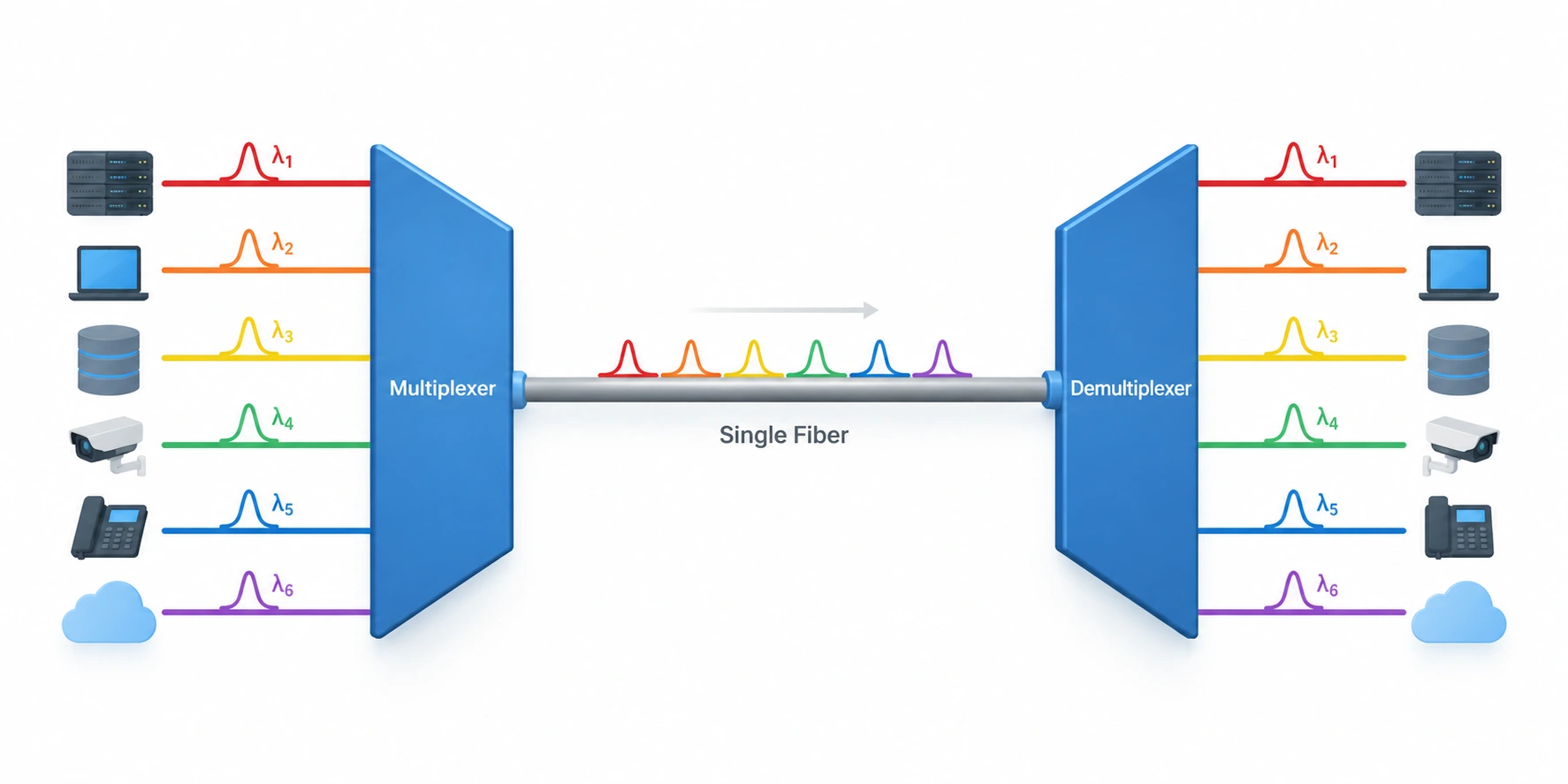
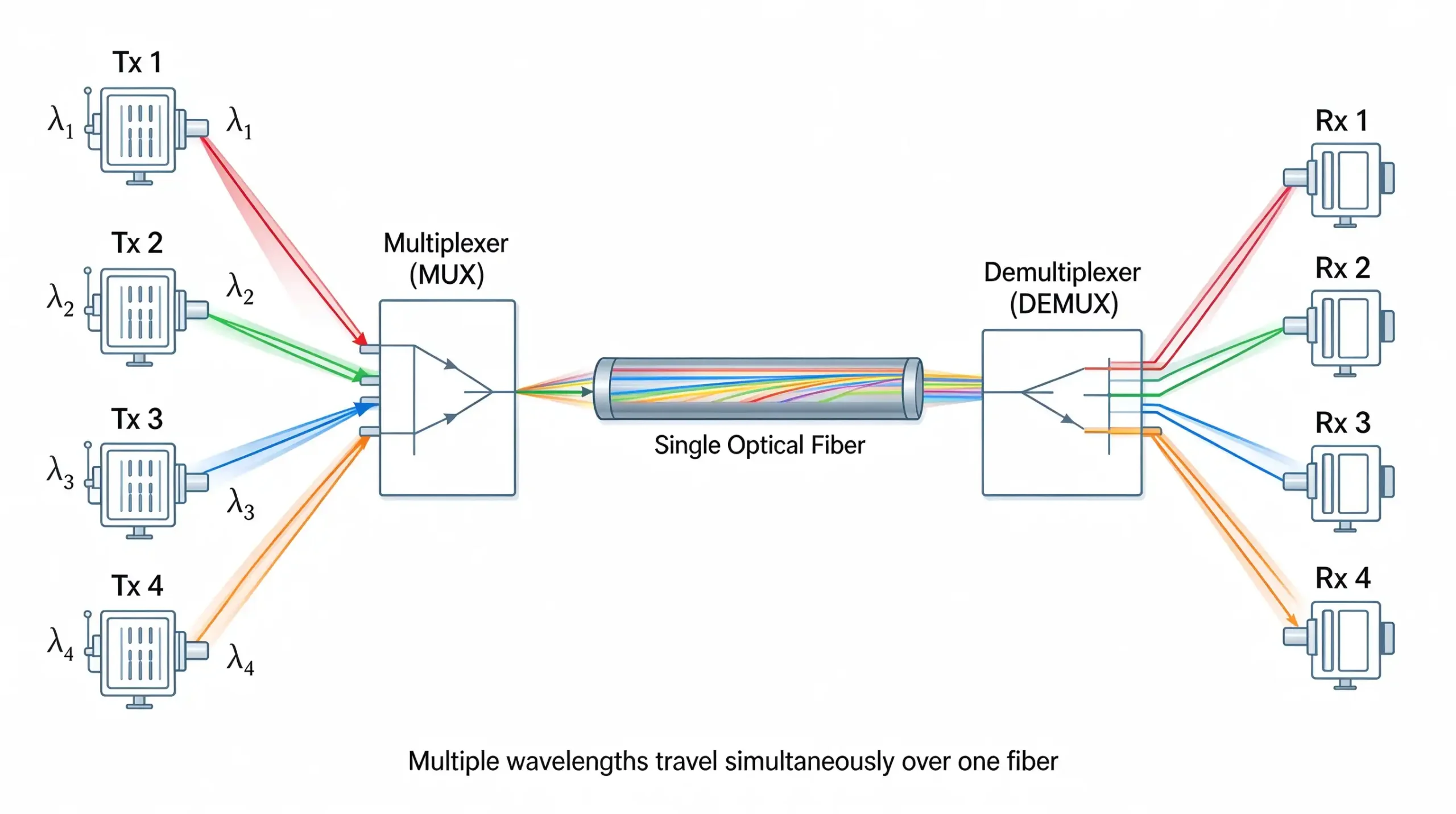
WDM (Wavelength Division Multiplexing) is an optical transmission technology used to increase the capacity of fiber communication networks. In optical fiber communication, WDM fiber optics enables multiple optical channels to share fiber infrastructure, supporting high-capacity data transmission for different network applications. The meaning of WDM is simple: different wavelengths of light carry different signals on one fiber, and a WDM system separates them at the receiving end.

WDM equipment plays an important role in data center interconnects, metropolitan networks, access networks, and backbone networks. WDM in computer network and data center applications provides the optical layer that carries data between switches and servers. By integrating technologies such as wavelength division multiplexing, optical amplification, dispersion compensation, and optical monitoring, WDM systems support different transmission requirements.

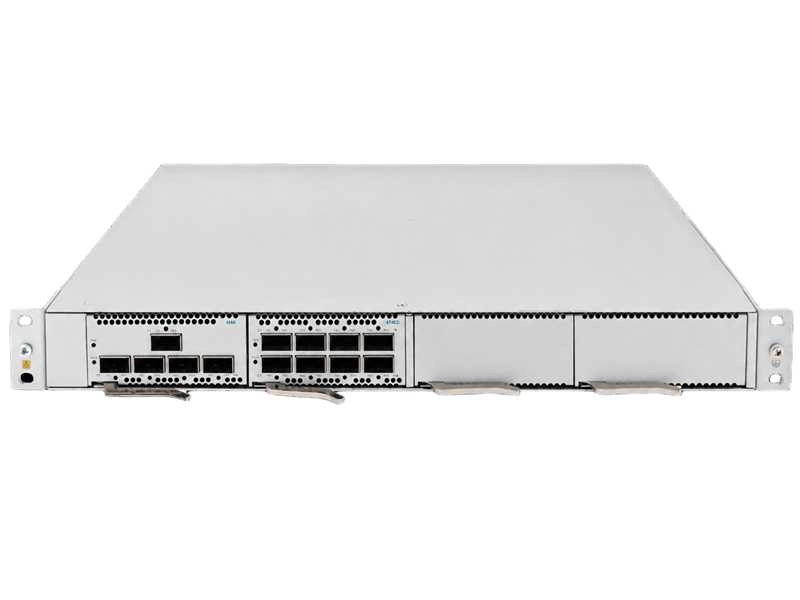
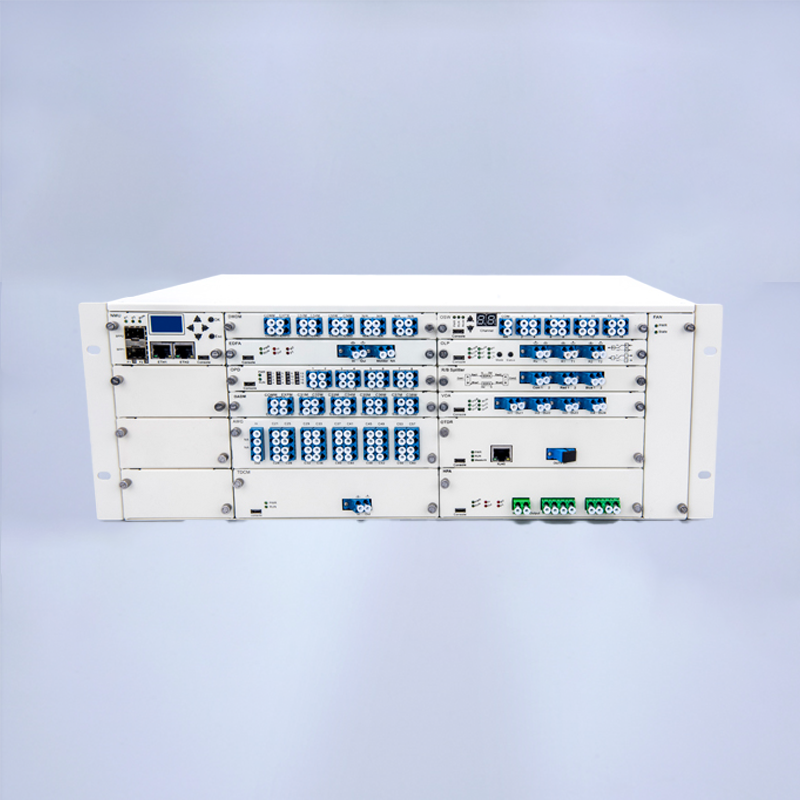
The TN2000 is a modular WDM system designed for different WDM applications. It is available in 1U, 2U, and 4U chassis with 4, 8, and 16 service slots, and all service cards can be mixed and hot-swapped. The TN2000 supports up to 56 × 2.5G or 28 × 10G interfaces, redundant AC/DC power supplies, and an operating temperature of -10 to 60°C. Together, these configurations provide different options for high-capacity optical transmission.

Functions of WDM Systems

A WDM system integrates wavelength division multiplexing, optical amplification, dispersion compensation, and optical monitoring in one platform. The TN2000 WDM device supports the following functions.

1. Modular, Mixed-Card Architecture

The TN2000 is available in 1U (4 slots), 2U (8 slots), and 4U (16 slots) chassis. All service cards can be mixed and hot-swapped in any slot. Both power supplies and fans are redundant and hot-swappable.

2. Full-Rate Multi-Service Access

The TN2000 supports signal rates from 155 Mbps to 11.3 Gbps. 10G, 25G, and 100G OEO and muxponder cards are available for Ethernet, SDH/SONET, ATM, and Fibre Channel services. All cards support 3R regeneration.

3. CWDM and DWDM Multiplexing

DWDM MUX/DEMUX cards provide 2/4/8/16 channels at 100 GHz spacing. An AWG card supports 40 channels, and CWDM cards use 20 nm spacing. WDM fiber optics cards also include OADM and red/blue filters for flexible network design.

4.Optical Amplification

The TN2000 offers single-channel, multi-channel, and high-power EDFA cards, as well as Raman and SOA amplifiers. DCM cards provide dispersion compensation for long-haul optical fiber communication links.

5.Optical Protection and Management

OLP, BIDI OLP, OXC, and OBP cards provide 1+1 and 1:1 line protection with automatic switching. OPM, OTDR, OSW, VOA, and OPD cards monitor optical power and fiber link status. The WDM device supports Web, SNMP, and in-band/out-of-band OSC management.

Applications of WDM Systems in Optical Fiber Communication

WDM systems support high-capacity optical transmission across different network environments. From metropolitan area networks to long-haul DWDM links, a WDM device helps improve fiber resource utilization and meet diverse optical transmission requirements.

Metropolitan Area Networks

DWDM and CWDM MUX/DEMUX cards are designed for metropolitan area network backbone layers. They multiplex different ITU-T wavelength signals onto a single fiber and separate them at the receiving end. The TN2000 supports 100G metropolitan area network Ethernet and both DWDM and CWDM channel plans.

Long-Haul DWDM Transmission

Long haul DWDM networks are supported by EDFA, Raman, and high-power amplifier cards together with DCM dispersion compensation cards. The TN2000 extends reach across long-distance links while keeping signal integrity. An AWG 40-channel card and red/blue splitter cards provide wavelength management for these networks.

SDH, IP and C/DWDM Networks

OLP, BIDI OLP, and OXC cards protect SDH networks, IP networks, and C/DWDM networks. They monitor the optical power of working and standby fibers and switch automatically when a fault occurs. Optical line protection reduces loss caused by fiber failures and improves transmission reliability.

Single-Fiber Bidirectional DWDM

Red/blue splitter cards are used for single fiber bidirectional DWDM systems, separating and combining red-band and blue-band signals on one fiber. This helps save fiber resources where cable is limited. BIDI OLP cards are applicable to single fiber systems.

R&D Center

Tryin R&D Center integrates innovation with validation to develop high-performance, standardized optical equipment aligned with evolving market demands. Leveraging customer insights and expert collaboration, we conduct rigorous real-world testing to ensure superior quality and reliability. Through precision engineering and strict laboratory processes, we achieve efficient development and stable production.

factory2-scaled
factory1-scaled
factory4-scaled

Technical & Service Support

From pre-sales verification to long-term operation, our support team stays with you at every stage of your network deployment.

Pre-sales

Pre-sales Function Testing

Provide demo environments and POC test support to verify product performance and compatibility.

7×24 Support

Remote Debugging Service

7×24 hours remote technical support to quickly solve deployment, configuration, installation, and fault problems.

Warranty

Warranty Service

Standard 2-year warranty (flexible adjustment via contract negotiation), covering hardware faults and performance assurance.

Support

Client Support Services

World-class customer support team to ensure long-term stable network operation.

FAQ

What does WDM mean?

WDM means Wavelength Division Multiplexing. It is an optical transmission technology used to increase the capacity of fiber communication networks. WDM fiber optics carries multiple optical channels on different wavelengths over a single fiber, so the same infrastructure supports more traffic.

WDM in computer network environments works at the optical layer. It provides the high-capacity links that carry data between switches, servers, and sites. In optical fiber communication, each wavelength runs as an independent channel, so different services and bit rates can share one fiber.

The main difference is channel spacing. DWDM cards use 100 GHz spacing with 2/4/8/16 channels, and an AWG card supports 40 channels. CWDM cards use 20 nm spacing. Both can be mixed in the same TN2000 chassis.

A WDM system is built from plug-in cards in a shared chassis. The main cards are MUX/DEMUX, AWG, OADM, OEO converters, muxponders, EDFA and Raman amplifiers, DCM, OLP protection, and OPM/OTDR monitoring. All cards can be mixed and hot-swapped.

The right WDM device depends on how many service cards you need. The TN2000 offers 1U with 4 slots, 2U with 8 slots, and 4U with 16 slots. It supports signals from 155 Mbps to 11.3 Gbps, redundant AC/DC power, and an operating temperature of -10 to 60°C.


Related Guides

Contact Us

Phone

+8618934815799

WhatsApp

+8615678382679

Address

Building 13, Unit 1, Creative Industry Park, No. 70 Qilidian Road, Qixing District, Guilin City